











NFC wristband – a way to encourage children to spend money wisely

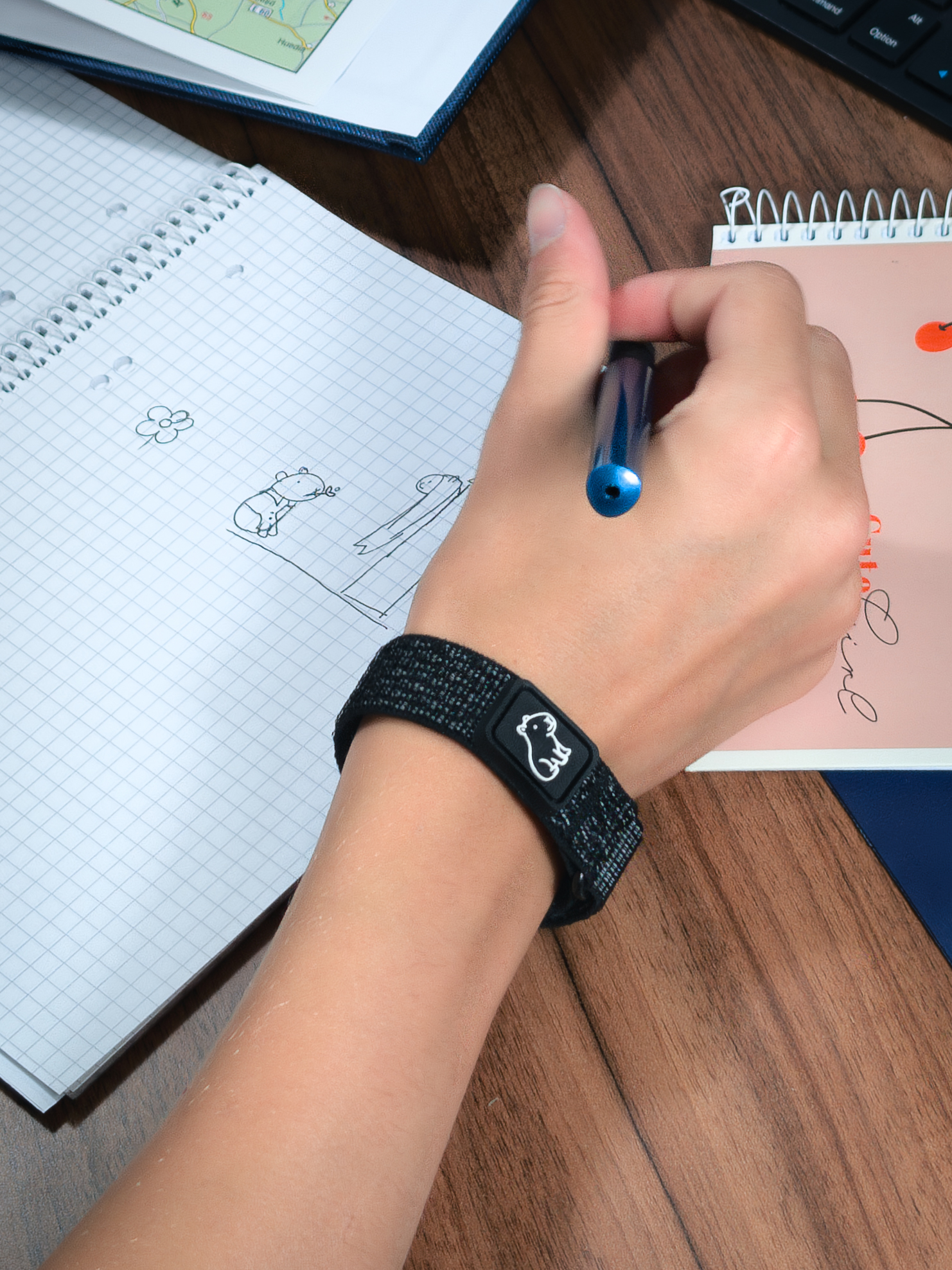
An NFC wristband is a clever financial coach right on your wrist. It gives your child the freedom to make small purchases, while giving you transparency and control. Find out how to use this gadget to give your child a solid foundation of knowledge that will serve them well in adulthood.
NFC wristband—what you need to know:
- The NFC wristband allows your child to make their own transactions and take their first steps in financial decision-making, all under discreet parental supervision and without the risk of significant losses.
- The wristband is both a tool and a symbol of money; regular conversations, setting savings goals, and establishing limits teach your child to plan and learn from their mistakes.
- Introducing the concept of “working savings” and rewarding them—for example, with an extra 2% for unspent allowance—teaches them to delay gratification and understand the benefits of saving.
- The wristband is hard to lose; transactions use a one-time, encrypted token, and if necessary, a parent can instantly block it in the app.
NFC Wristband – How Does It Motivate a Child to Be Independent?
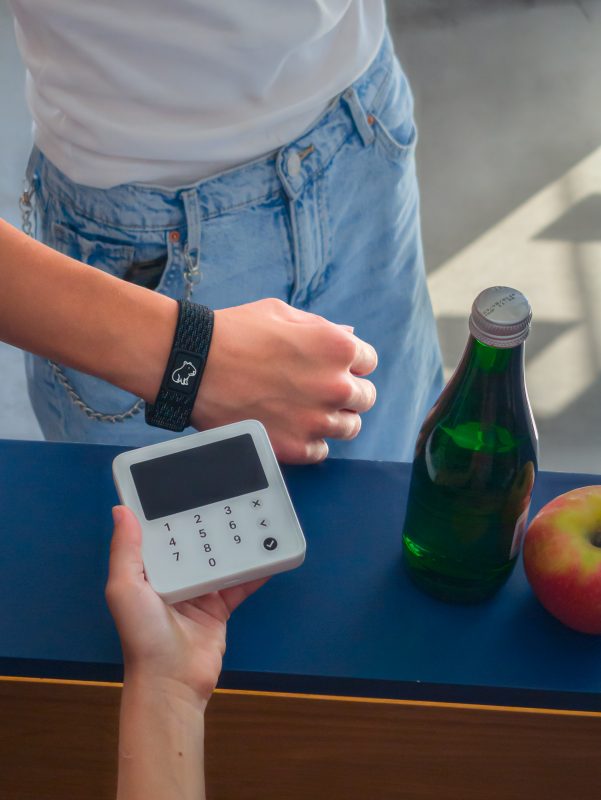
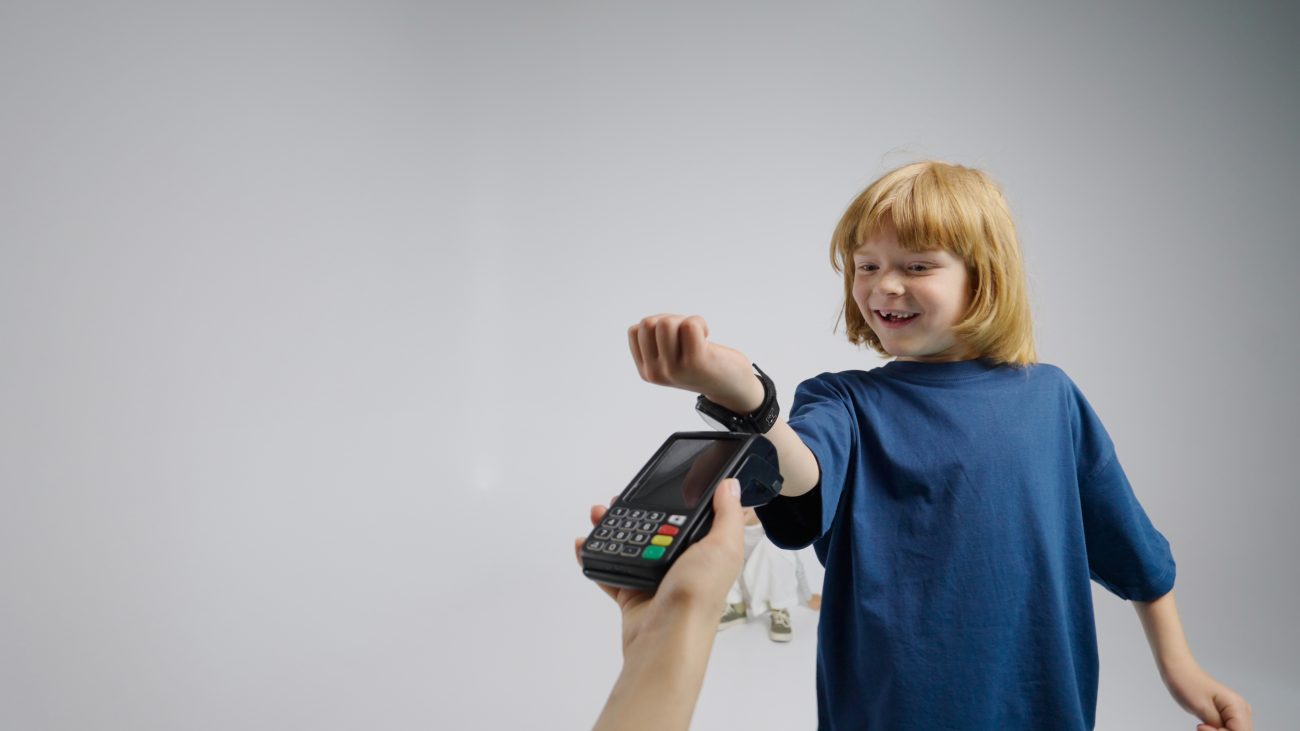
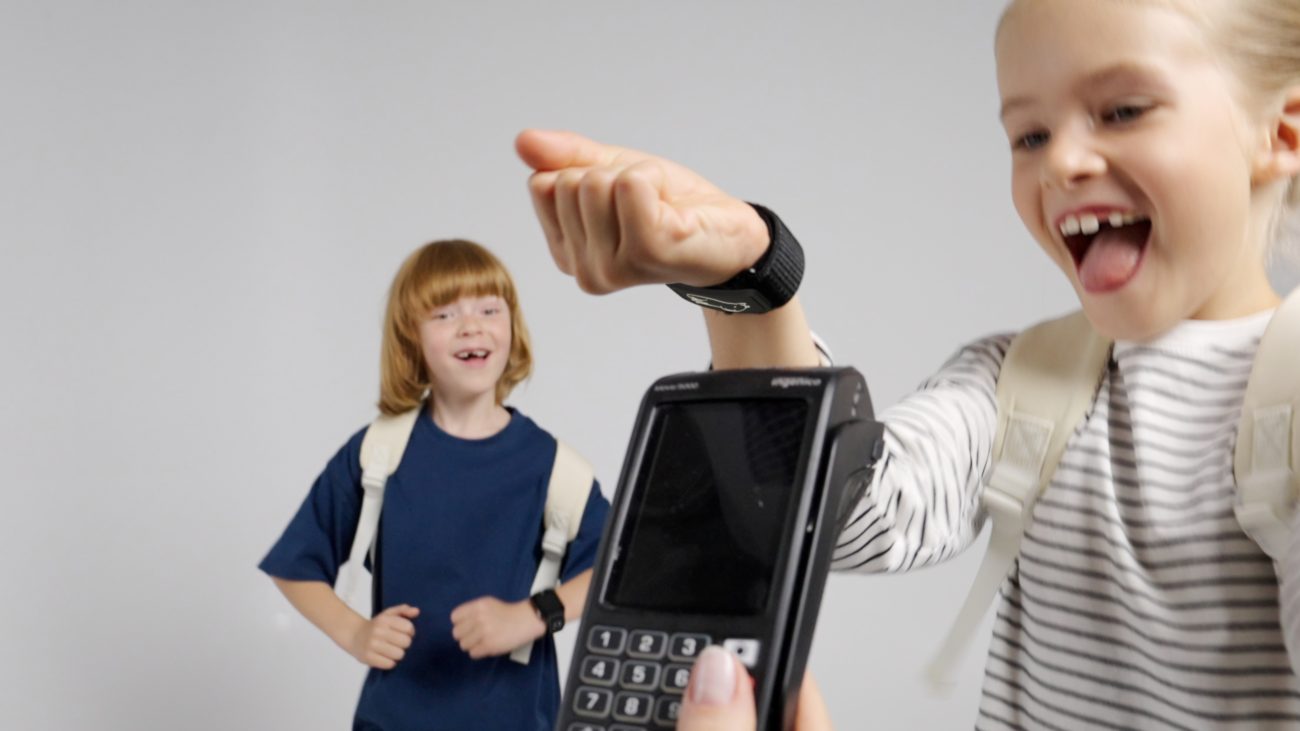
An NFC payment wristband is nothing more than a modernized version of traditional allowance. Instead of giving your child cash, you transfer the appropriate amount and provide them with the wristband as a payment device instead of, for example, a debit card.
This will be hugely significant for your child, as this solution offers them the chance to explore the world on their own and the opportunity to learn something that will truly be useful in life. Pocket money given in this way is a taste of adulthood, which involves the freedom to pursue various activities, but also the need to accept their consequences.
By teaching financial literacy on a mini-budget, you can show your child the joy of achieving set goals, as well as the loss of money resulting from a bad decision. However, everything takes place under controlled conditions, where the stakes aren’t thousands of zlotys, but rather tens or hundreds. The lesson learned from such an experience will, however, leave a lasting impression, regardless of how large the budget deficit turns out to be.
Finally, an NFC wristband can be an expression of the trust you place in your child. After all, you’re not just giving them a nice gadget to wear on their wrist, but also full access to funds they can use as they see fit. Although you, of course, maintain discreet control over everything, your child can still learn independence in a safe environment.
The NFC Wristband and Your Child’s First Financial Decisions
There’s no denying that owning an NFC wristband means, above all, convenience and a sense of security. Your child always has access to their money in a form that’s hard to lose. Parents, on the other hand, don’t have to worry that their child will be left without cash in an emergency.
However, the educational aspect of NFC wristbands is also significant. These are electronic gadgets designed to appeal to children’s tastes. As such, they encourage children to make their first financial decisions—decisions that, at first, usually have no serious consequences and involve, for example:
- purchases for small pleasures, such as a candy bar at the school store or going to the movies with friends,
- pursuing hobbies,
- discovering their own style and preferences,
- fulfilling small dreams, such as going on a trip or buying something more expensive.
Contrary to what it may seem, a child doesn’t have to start their financial education by learning the mechanisms behind how banking products work—there will be time for that later. At the beginning of this journey, the basics are enough, such as dividing their own money into three categories:
- what I have,
- what I’m spending now,
- what I want to save for a specific goal.
In theory, a payment card supports only the second of these goals, since it’s used for making payments. In reality, it’s a symbol representing all three. With the right introduction to the world of finance, a child will understand that they don’t always have to spend all the money they have. Sometimes it’s better to hold back and wait a little longer so as not to regret a hasty financial decision.
Are you wondering if this approach really works? In our opinion, it does, and the stories we hear from our customers only confirm this. See what Robert has to say—he’s truly proud of the progress his daughter Zuzia has made.
Zuzia has always had big dreams—from the Lego set she’s been longing for to the roller skates she saw at a friend’s house. In the past, she’d spend her allowance right away and then cry that “she hadn’t managed to save anything.” It broke my heart, but I knew I couldn’t buy her everything. Over time, the Maxcom Pay wristband became her teacher of patience. Instead of running to the store for little things, she started checking the banking app with me: how much she already had, how much she was short. I saw the same thing and could suggest, “Maybe a candy bar today, or maybe it’s better to save up for your goal?” This changed our relationship—talking about money stopped being an argument and became joint planning. For me, it’s not just a wristband—it’s a parenting tool that gives me peace of mind, knowing I’m teaching my daughter responsibility and good habits she’ll use in the future.
NFC Payment Wristband—Support for Learning to Plan a Budget
Simply giving your child a payment wristband won’t magically make them start making thoughtful financial decisions. It’s just a tool you can use to achieve your goal: to raise a young person who, as an adult, will have a healthy attitude toward money and won’t get into trouble due to poor budget management.
You’ll have to figure out for yourself which financial education methods will work best for your child. However, we can recommend a few clever strategies that might work—think them over and decide if you want to try them out.
- Half an hour a week on finances – Regular conversations about expenses and goals teach your child to plan, analyze successes, and learn from mistakes without assigning blame (e.g., You spent money on a video game, and now you know you’re further away from buying your dream bike).
- Financial goals – using savings subaccounts or “jars” teaches perseverance and delayed gratification, showing that money is a tool, not an end in itself (e.g., a separate goal for buying a video game or a bike).
- Motivation to save—rewarding a child, for example, with an extra 2% for unspent allowance introduces them to the concept of “earning savings” and prepares them for their first savings account (e.g., for every 10 zł they don’t spend right away).
- Good habits – managing their own allowance while following rules such as thoughtful spending, comparing prices, and setting limits fosters financial responsibility (e.g., a limit on subscriptions, comparing unit prices).
The early stages of financial education can be challenging, and a child may feel disappointed when a decision turns out to be a mistake and leads to running out of money quickly. Although you may be tempted at that moment to give them extra allowance—resist the urge. Rescuing them at this point will teach them that they can act carelessly because there will always be more money available. Meanwhile, financial education should convey a different lesson: “If you spend it now, you won’t have it later.”
Spending Limits on NFC Wristbands—How Do They Teach Responsibility?
Are you worried your child will quickly run out of money? Mistakes are part of the learning process, so they’re to be expected. At the same time, you can limit the scale of those mistakes so that bad decisions are as painless as possible. Daily and monthly limits will help you with this.
Although your child pays for purchases using NFC technology, the wristband is merely a tool that’s held near the terminal. In reality, however, it processes data from the payment card. Therefore, you’ll find the option to block expenditures exceeding a certain limit in the banking app.
NFC Wristbands vs. Parental Control and Security
Traditional cash allowances can easily be lost, and payment card data can be read remotely through a process known as skimming. In terms of security, an NFC wristband is far superior for the following reasons:
- it fits snugly on the wrist, so it’s hard to lose,
- no sensitive data about your child, yourself, or your payment method is stored on the device—a one-time, encrypted token is generated for each transaction,
- a lost or stolen wristband can be instantly blocked in the Fidesmo app so that no one can use it,
- it doesn’t require charging, so it will never fail at the worst possible moment.
Both you and your child can therefore enjoy peace of mind.
NFC wristband—technology that gives parents peace of mind
When you give your child the wristband, you don’t have to worry that they’ll be left without money in an unexpected situation. If that happens, all it takes is a quick phone call and a fast transfer—and the problem is solved.
This small gadget will also give you a sense of security in other areas. It’s worth appreciating, for one thing, that it allows you to provide your child with a safe space to develop independence, while still keeping a close eye on things at all times. This way, you show that you trust them, while remaining ready to help if they ever need it.
Is an NFC wristband an investment in your child’s future?
Although an NFC wristband looks stylish and is more convenient than a wallet, it’s also worth considering its educational value. With the right approach, it can help you teach your child a solid foundation of financial literacy in an accessible and natural way—ensuring that these lessons stick with them for a long time. You can therefore view purchasing one as an investment in your child’s secure future.
FAQ – Frequently Asked Questions
How can a parent motivate a child to save?
A parent can reward their child, for example, with an extra 2% for any unspent allowance. Planning together and tracking progress in sub-accounts or “jars” teaches patience and the value of delaying gratification.
Is the NFC wristband secure in terms of data?
Yes. The wristband does not store sensitive data, and each transaction generates a one-time, encrypted token. Parents control the spending limits and can immediately block the device if it’s lost.
How can you establish regular financial habits with digital allowance?
Weekly discussions about spending and goals, reviewing transaction history, setting spending limits, and addressing the consequences of poor decisions work best.
How does the NFC wristband foster a child’s independence?
The wristband gives a child access to their own budget and teaches responsibility. Although parents control the limits and monitor spending, the child makes financial decisions in a safe environment.